
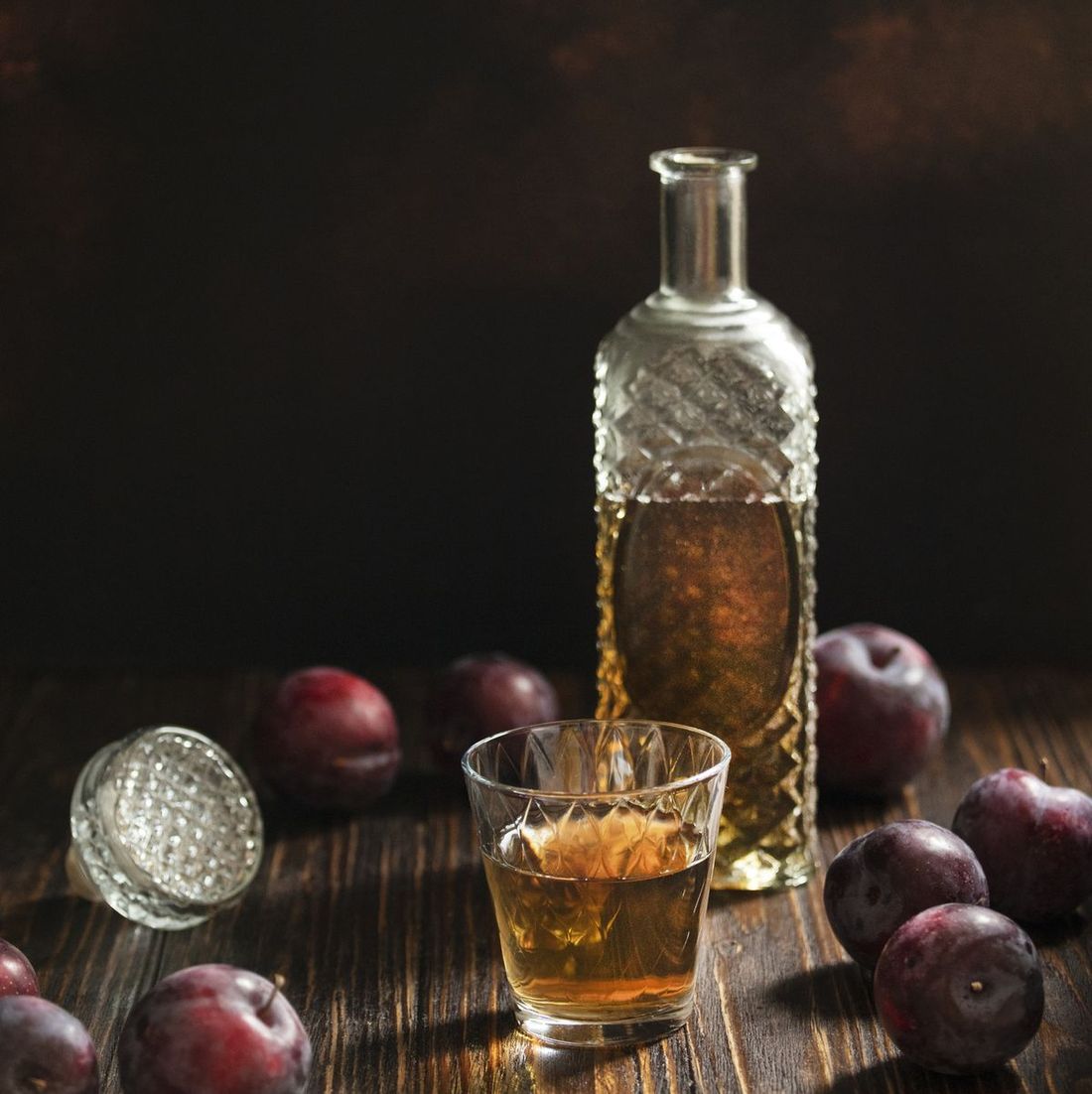
Fermentation is the heart of making plum brandy. It is a complex procedure made up of several key stages, each of them vital to the quality and flavour of the finished product. Below we look at each step of fermentation in detail, from pulping the fruit to adding yeast and enzymes, and at why the correct use of yeast and enzymes matters so much for a first-rate result.
De-stoning and pulping the plums
Pulping the fruit is the opening step in fermenting plums for brandy. The process is often overlooked, but it has a key part to play in traditional production. By removing the stones from the fruit we make sure the fermentation is clean, without the risk of damage that substances from the stones, such as amygdalin, could cause. Pulping also speeds up fermentation, which reduces the chance of unwanted microbiological processes.
Adding the yeast
Once pulped, the fruit is ready for fermentation. Adding selected yeast is essential for a controlled fermentation. Yeasts are micro-organisms that convert sugars into alcohol, and selected strains ensure a stable fermentation without the unwanted substances that could compromise the brandy. Lalvin V1116 is one example of a yeast often used for slivovitz, because its characteristics suit variations in temperature.
Preparing wine yeast for fermentation involves several key steps that call for precision and attention if the fermentation of wine or brandy is to succeed. First the yeast is dissolved in water, and it is important to hold the water at 38 °C, because that suits the yeast best. The yeast is then left to rehydrate, which takes 15 minutes. Through this process the yeast becomes active and ready to be added to the wine or the mash.
It is important to note that wine yeast must never be added straight into the mash or fruit pulp, because that can damage the yeast cells and compromise the fermentation. Instead, after rehydration the yeast is brought to temperature so that it adjusts to the temperature of the mash. This means carefully adding mash to the rehydrated yeast with gentle stirring, until the temperature is no more than 10 °C above the temperature of the mash. The step takes about 45 minutes to an hour.
Once the yeast has been prepared and brought to temperature, it can be added to the mash or fruit pulp. The yeast is usually added at the bottom of the vessel and stirred in carefully so that it is distributed evenly through the mass. After the yeast has been added, the temperature should be held at 16 to 18 °C to encourage fermentation.
As for dosage, it is important to follow the instructions given on the yeast label. Usual concentrations have been in the range of 20 to 30 g per 100 litres of must or per 100 kg of mash or fruit pulp, though this can vary with the type of yeast and the product being made.
Yeast nutrient is also necessary, but it is added to the must, mash or fruit pulp before the yeast. This step should not be carried out at the same time as adding the yeast, so that the yeast is not burdened with a large quantity of nutrients all at once. Yeast nutrient can also be added at a later stage of fermentation, at around a third of the way through.
Careful preparation and consistent adherence to these steps are essential for a successful fermentation of wine or brandy and for the characteristics you want in the product.
Yeast nutrient
Yeast nutrient has an important part to play in supporting the growth and reproduction of yeast during fermentation. Universal yeast nutrient is widely used for its simplicity and effectiveness. The correct dose of nutrient is essential to an optimum fermentation and to the characteristics sought in the brandy.
In fermentation, yeast plays the key role by converting sugar into alcohol and carbon dioxide. For the yeast to do this efficiently, however, it also needs proper nutrition. The basic nutrient for yeast is nitrogen.
When discussing yeast nutrition, one concept matters particularly: yeast assimilable nitrogen, or YAN, the nitrogen that yeast is able to take up. YAN is the combination of free amino nitrogen (FAN), ammonia (NH3) and the ammonium cation (NH4) available to the yeast in the must during fermentation. These forms of nitrogen are essential to yeast nutrition and allow it to carry out fermentation.
During fermentation the yeast stores amino acids in its intracellular vacuoles, which allows it to use surplus nutrients for later needs.
Because nitrogen matters so much to fermentation, it is advisable to check the YAN level in the must before fermentation begins, to establish whether additional yeast nutrient is needed. Adding an excessive quantity of nutrients can affect the yeast adversely and lead to the development of unwanted micro-organisms. Managing yeast nutrition carefully is therefore important for a successful fermentation and a quality product.
Adding enzymes
Enzymes are biological catalysts that speed up fermentation and improve the characteristics of the mash. By adding suitable enzymes, such as Lallzyme Fruit and Lallzyme Cuvée Blanc, we achieve a higher mash yield and better extraction of aromas, while reducing the quantity of unwanted substances such as methanol. The correct temperature and pH of the mash are essential if the enzymes are to work effectively and give the results intended.
Enzymes have several beneficial effects on the fermentation of brandy. First, they speed fermentation up, which shortens the time the process needs. A shorter fermentation reduces the risk of adverse microbiological processes that could compromise the brandy.
Enzymes also help distribute yeast, nutrient compounds, acids and other substances evenly through the mash. That ensures a stable fermentation and the characteristics sought in the brandy.
Another effect is a thinner layer of yeast during fermentation. This makes distillation easier and allows better control over the quality of the finished product.
Enzymes also contribute to a thorough breakdown of the fruit, which means a smaller volume of mash and better use of the fermentation vessels. That improves the conditions for pumping the mash over and allows optimum use of raw material and energy through the production process. All these advantages make enzymes an indispensable part of fermenting brandy, and give producers a means of reaching the highest quality and flavour in their product.
The optimum mash temperature for fermenting plums is between 16 and 20 °C, while the pH is usually between 3.8 and 4.0. To reach ideal conditions, sulphuric or phosphoric acid can be used to bring the pH of the medium down to 3.2.
Once the enzymes have been added, fermentation begins to progress naturally. It is important to note that the vessels in which the mash will ferment should not be filled to the top, but to about 75 per cent of capacity. The vessels should also be sealed airtight so that no oxygen gets in. Opening them should be avoided, except in the first few days after the fruit has been added, when the mash needs stirring to ensure an even fermentation.
When should yeast nutrient be added?
A shortage of yeast nutrient can seriously affect both the fermentation and the quality of the brandy. The problem usually becomes apparent during fermentation, when the wine begins to close up, meaning it starts to give off the unpleasant smell of sulphur compounds.
When the yeast lacks nitrogen during fermentation, yeast cells begin to die, and some strains begin releasing sulphur from amino acids such as cysteine and methionine. That release of sulphur atoms can result in the formation of hydrogen sulphide, known for its strong, unpleasant smell of rotten eggs. The formation of hydrogen sulphide is not always directly linked to a shortage of nitrogen compounds, however; other factors can affect the process too, including particular yeast strains that can produce larger quantities of hydrogen sulphide even when they have nutrient enough.
When you meet this problem, it is important to react at once by adding further nutrient to the fermentation. Yeast nutrient can be organic or inorganic, depending on which nutrients it supplies to the yeast.
Inorganic yeast nutrient usually consists of diammonium phosphate (DAP), which supplies the basic nitrogen compounds the yeast needs for its metabolism. DAP has to be added carefully, however, because an excessive quantity can harm the yeast and lead to a rapid fermentation, which can compromise the quality of the wine or brandy. DAP should never be added together with the yeast; it should first be dissolved in the whole volume of must before the yeast goes in.
Organic yeast nutrient usually consists of supplements that help the yeast avoid a stuck fermentation or other problems. These supplements can include vitamins, amino acids, inactivated yeast, sterols and other organic substances that help the yeast ferment without difficulty.
When is the best time to add yeast nutrient?
There are two approaches to this question. One is to add the nutrient right at the start of fermentation, but that can mean an excessive quantity of nutrient and a rapid fermentation. The alternative is to divide the planned quantity in two and add it at the start of fermentation and at around a third of the way through, which has proved an effective approach with minimal adverse effects.
We can conclude that managing yeast nutrition properly is essential to a successful fermentation and to producing quality wine and brandy. Keeping a balance between inorganic and organic yeast nutrient, and dosing carefully, are the key factors in achieving the results you want from fermentation.
How long fermentation lasts
In brandy production it is extremely important to have precise knowledge about fermentation. The question of how long fermentation should last comes up often, and it was traditionally held that 21 days is the optimum. That rule is not universal, however, and following it blindly can lead to mistakes. In reality the duration can vary considerably depending on factors such as temperature, the quantity of yeast in the fruit and other microbiological processes.
When making plum brandy, distillation has to begin as soon as fermentation is complete. If fermentation finishes earlier, the mash should not stand and wait a set number of days; it should go to distillation so that the freshness of the fruit aromas is kept.
Temperature plays a key part in the speed of fermentation. Higher temperatures speed the process up, while lower temperatures can slow it down or even bring it to a halt. It is therefore important to monitor the temperature of the mash and adjust it as the fermentation requires.
One useful tool for monitoring fermentation is the Oechsle hydrometer. It measures the sugar level in the fruit, which indicates when fermentation has finished, that is, when there is no sugar left in the fruit. The Oechsle hydrometer is affordable and simple to use, which makes it a useful tool for every brandy producer.
It is important to note that no additional sugar should be added to the mash during fermentation. Enzymes and yeast are recommended instead. Using enzymes and yeast keeps the brandy natural while improving its quality at the same time. These additions help break the fruit down better, distribute nutrients evenly and reduce the chance of unwanted microbiological processes that could affect the quality of the brandy.
By monitoring fermentation closely, using tools such as the Oechsle hydrometer and dosing enzymes and yeast carefully, it is possible to produce a high-quality brandy that will satisfy even the most demanding tastes. This is an essential part of brandy production, and one that requires expertise, attention and commitment if the results are to be what you intend.
Conclusion
Fermenting plums for brandy requires a careful balance of various factors if the finished product is to have first-rate quality and flavour. The correct use of yeast and enzymes is essential to the characteristics you want, while monitoring the fermentation closely allows optimum results. With proper care and careful management of the fermentation, plum brandy can become a real masterpiece, ready to win over anyone who loves this traditional spirit.