
Pinus nigra Arnos.
The natural range of black pine, which has several subspecies and varieties, lies in southern Europe, North Africa and Asia Minor.
The pine tree is evergreen and up to 40 m tall. The crown is broad and ovate. On poor and rocky terrain the crown can take an umbrella shape. The trunk is straight and up to 20 m long, with a diameter at breast height of up to 1.2 m. The bark of the trunk is grey-brown to black-grey and fairly thick; it fissures early, developing deeper longitudinal and shorter transverse cracks.
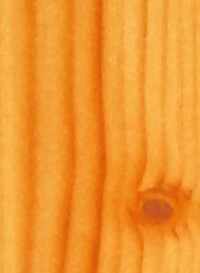
Pine is a heartwood-forming wood; the sapwood is yellowish-white, narrow or wide, and heartwood formation begins between 40 and 60 years of age. The heartwood is reddish-brown; in the fresh state there is no marked difference in colour between heartwood and sapwood, but later, as the moisture content falls and oxidation takes place, the heartwood becomes reddish-brown. The growth rings are distinct and the transition from earlywood to latewood is abrupt. The resin canals are numerous but barely visible. The wood rays are barely visible on radial sections and not noticeable on transverse and tangential ones; they are thin and heterocellular.
Black pine wood is of medium weight, with a density of about 580 kg/m3 in the oven-dry state, about 620 kg/m3 air-dry and about 1000 kg/m3 green. Total linear shrinkage is 0.4% axially, 4.3% radially and 7.74% tangentially. Total volumetric shrinkage of pine is about 12.6%.
Black pine wood is very durable. It is used in construction, joinery, the aircraft industry, the furniture industry and elsewhere. Because of its high durability it is particularly valued as pit prop timber and as wood for exterior use in the production of windows, doors and similar.