
Fraxinus excelsior L.
The range of common ash covers the whole of Europe and the northern parts of Asia Minor. Its altitudinal distribution runs from 650 m above sea level to about 1400 m in the mountains of the Southern Alps.
The ash tree is 25 to 35 m tall, with a trunk length of 15 to 20 m. Trees up to 300 years old reach a diameter at breast height of up to 1 m. The crown is oval and rounded. The branches are thick and mostly directed upwards.
When young, ash has thin, smooth, greenish-grey bark, which in old age takes on a yellow-grey colour and becomes shallowly and smoothly furrowed. The bark accounts for about 13.9% of the volume and its density is about 457 kg/m3.
The density of ash wood is 650 kg/m3 in the oven-dry state, 690 kg/m3 air-dry and up to 1140 kg/m3 green. The volumetric porosity of ash is 57%. Total linear shrinkage is about 0.4% axially, 4.6 to 5.0% radially and 8.0 to 8.4% tangentially. Total volumetric shrinkage is 12.8 to 13.6%, and specific volumetric shrinkage 0.43 to 0.45%.
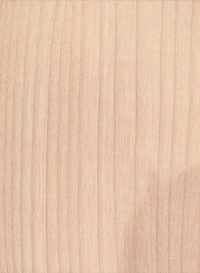
Ash wood works well both by hand and by machine; it planes and turns well, and dries and glues well. Ash generally takes surface finishes well, although it stains poorly. The grain is straight, the wood splits well and bends easily.
Ash is particularly valued in the production of sliced and peeled veneer. It is used for furniture and parquet, and as structural timber for both exterior and interior use. Special uses of ash include sports equipment, period furniture, shipbuilding, railway carriage building, the aircraft and machine industries, and other fields.