
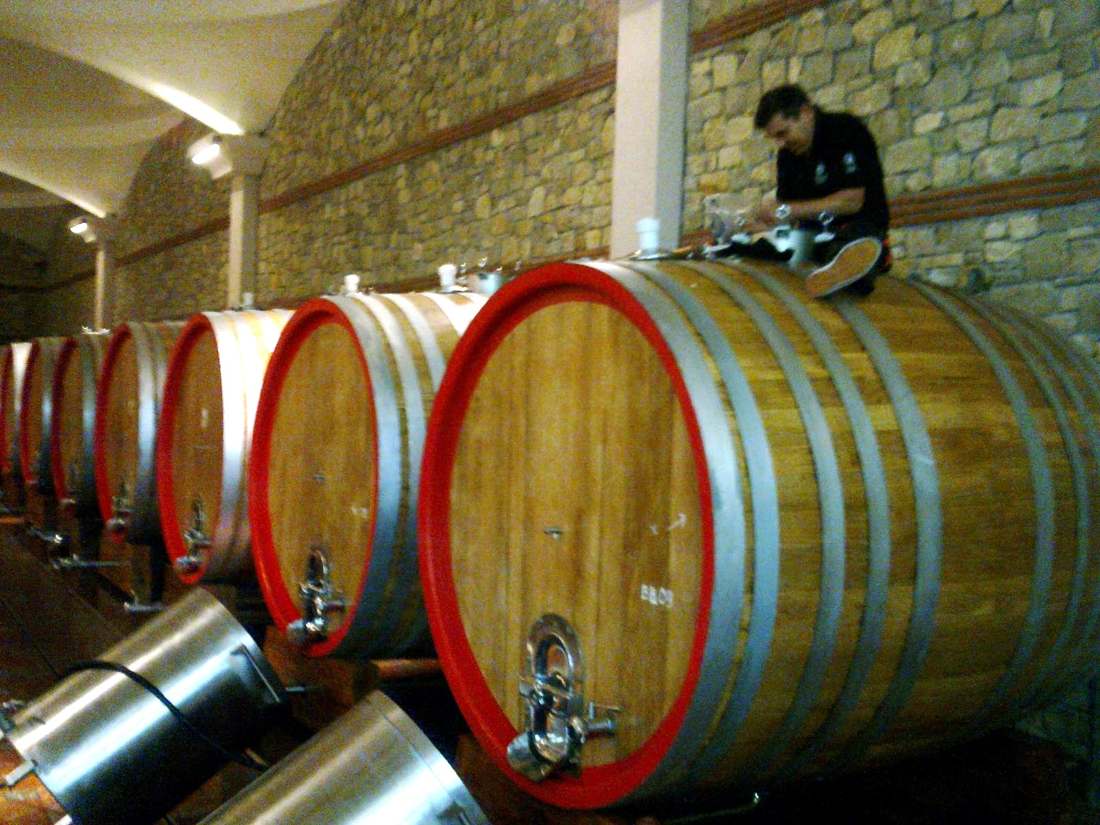
The experience of the Rajac winegrowers
For the high quality and the natural character of home-made wines, skilled care and maintenance of the vessels for grapes and wine matters a great deal.
When we asked the well-known winegrowers from Rajac, near Negotin, what the secret of the naturalness and the high quality of the local wine is, they put the cellars in which they keep it in first place. These are half-buried stone houses, built on a wooded clearing above the village, where the temperature does not go above 12 °C even in the greatest heat. This “town of wine”, the Rajac cellars, has long been known and is visited by lovers of a good drop from all over the world.
Yet however proud they are of these cellars and of their centuries-old skill in making wine, many of the local cellarmen see the secret of the quality and the naturalness of their wines above all in their traditional persistence and in the established routines for keeping the barrels clean and sound.
The basics: keeping the vessel sound
As the experienced cellarmen Dragiša Milenković and Dragiša Mihajlović point out, there is about as much work in the regular maintenance of the vessels as there is in making the wine itself. When a barrel is emptied and rinsed of the lees, the inside is inspected first. This is most often done with a torch passed through the bung hole and moved left and right, up and down, on a wire holder, while the inside is examined.
If the inspection shows that the vessel is clean, the smell from the barrel is checked. The quickest way of establishing an unwanted smell in smaller barrels is to strike the bung hole firmly with the palm and then smell the air that comes out of the vessel.
Since any off smell from a vessel is undesirable, its presence is also checked before a barrel is used again after standing for a longer time. A few litres of warmed wine are poured into the clean barrel, the barrel is rolled well, and then the smell and the taste of the wine are assessed. If there is an off smell in the barrel it will show in the wine, so the vessel has to be sterilised before use.
Removing tartrate
Tartrate deposits must be removed from the inside of the barrel regularly, because the staves take up their smell even after the deposit has later been removed. In barrels of a smaller volume the deposit is removed with a bung chain. In larger barrels with a door the deposits are heavier, so they are removed with a hammer and a steel brush and by coating with a one per cent solution of sulphuric acid. After the tartrate has been removed, the vessels are rinsed well with cold water, aired and sulphured.
Sterilising barrels
A sound barrel is the easiest to maintain, so no disease must be allowed to develop in it. The regular measures for every emptied vessel are: removing the tartrate, washing with cold water while rolling the barrel, rinsing, airing and sulphuring. If a washed and sulphured vessel is not used for a longer time, the sulphuring should be repeated every 30 to 40 days.
For regular maintenance of barrels it is best to use an ordinary scrubbing brush and clean cold water, as the Rajac cellarmen point out. Occasional sterilisation of the barrel against bacteria and off smells can then be limited to steaming or rinsing with hot water, and to sulphuring.
Mould and how it is treated
A real cellarman will not allow mould to develop in his vessels and its spores to get into the joints between the staves. Even so, an unpleasant mouldy smell appears in older barrels over time. In such cases, depending on the age of the vessel and on how much use is left in it, the local cellarmen “treat” them by slaking quicklime. In more serious cases the barrel is taken apart, each stave is scraped separately and partly charred, and the barrel is then put back together. Whether a “treated” barrel can be used is checked by the method already described, by pouring in a few litres of warmed wine.
From red wine to white
The experience of the local cellarmen in cleaning barrels of the colouring matter of red wines, so that they can be used for keeping white wines, is interesting. To prevent the remains of the colouring matter passing from the red wine into the white, most of this matter is removed while the tartrate is being taken off. Milk of lime is then put into the barrel and the barrel is rolled well. After rinsing with water, white wines can be kept in it.
Make it yourself: a sealing compound for barrels
“Activating” a barrel so that it can take a racking puts the cellarman before the not inconsiderable problem of sealing the gaps and any cracks that often appear in wood that has dried out more or less. The problem is even more present in barrels with doors, which make maintenance easier and widen the uses of the barrel, but also increase the risk of leaking and of losing wine.
Sealing is usually done, with more or less success, with tallow and wax. Even so, it has happened that through a little carelessness such a seal gives way, which has left cellarmen permanently watchful. It is therefore best to make the sealing compound from 60 grams of beef tallow, the same amount of lard and 10 grams of beeswax. The mixture is melted over a low flame and sifted wood ash is slowly added to the melt.
The amount of ash added is such that after cooling the mixture has the density and the plasticity needed for it to be kneaded easily. Applied to the conical edges of the door, the compound becomes a true sealant, entirely safe and impermeable to wine. And pressing the compound into any cracks and gaps in the barrel seals them permanently.