
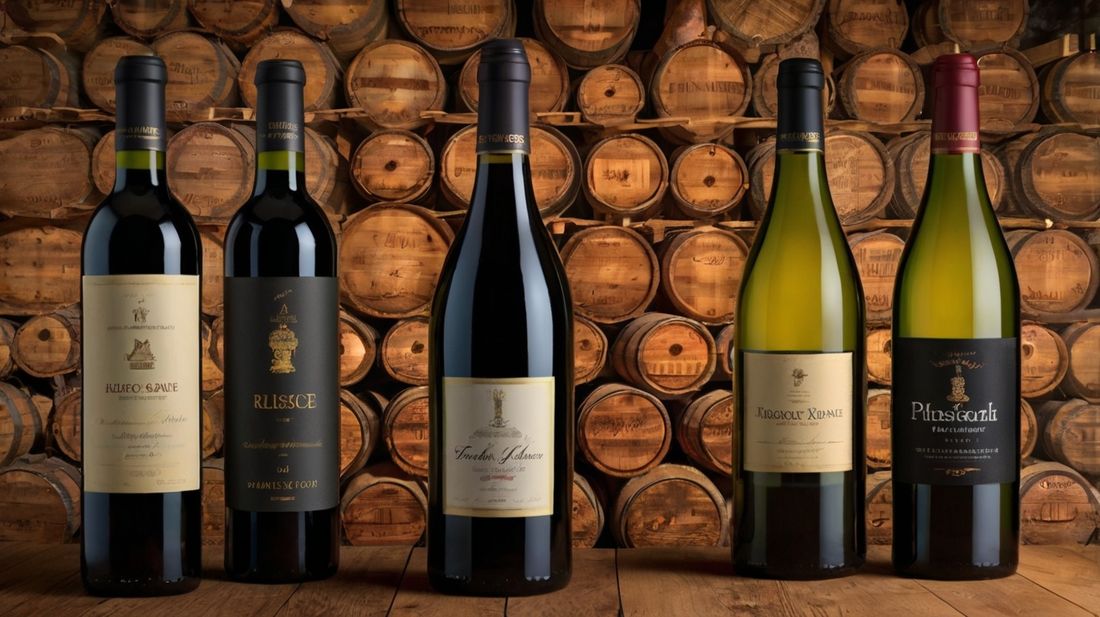
Wine bottles are more than containers for keeping wine. They are aesthetic, historical and functional objects that play a decisive part in the world of wine. Their form is not a matter of chance but a reflection of the style of the wine, its geographical origin and its cultural tradition.
1. From amphorae to the perfect shape
Before glass bottles became the standard, wine was kept in amphorae, wooden barrels and leather skins. Glass bottles came into use in the 17th century, and the first real boom came in the 18th, when industrial production began.
- Antiquity: wine was transported in wooden barrels.
- 17th century: the first hand-blown glass bottles.
- 19th century: the height, volume and shape of bottles were standardised.
The development of the shape was bound up with easier storage and transport and with preserving the quality of the wine.
2. The main shapes and what they mean
The shape of a bottle often indicates the kind of wine it holds and the region it comes from.
2.1. Bordeaux. Probably the most common shape in the world, this recognisable design comes from Bordeaux in France. Upright and slender, with straight sides and pronounced, high shoulders leading to a straight neck, it can be seen in almost every wine-producing country. The varieties most often associated with it are Merlot, Malbec, Cabernet Sauvignon, Cabernet Franc, Semillon, Sauvignon Blanc and Chenin Blanc – in essence all the key Bordeaux varieties. Description: tall, straight shoulders. Typical wines: Cabernet Sauvignon, Merlot, Bordeaux blends. Regions: France (Bordeaux), Italy, the New World. Character: practical for storage and for branding.
2.2. Burgundy. This is the seductive, sensual bottle – wide at the base, with soft, rounded lines rising to a shorter neck. Unlike the Bordeaux bottle, it has almost no straight edges or pronounced shoulders, preferring a flowing silhouette. The varieties most often associated with it are Chardonnay and Pinot Noir. Description: wide base, sloping shoulders. Regions: Burgundy, Oregon, New Zealand. Character: it looks more elegant and gives a premium feel.
2.3. Rhône. Very similar to the Burgundy bottle, but usually somewhat taller with a longer neck. Traditional wines from the French Rhône valley often carry an embossed coat of arms or shield on the bottle itself, though this is rarely seen on Rhône varieties from other countries. The varieties most often associated with it are Grenache, Mourvèdre, Viognier, Syrah, Marsanne and Roussanne. Regions: Côtes du Rhône, Châteauneuf-du-Pape.
2.4. Alsace / Rhine. Tall, slim and beautifully elegant, the Alsace bottle (variations include the Mosel and Rhine bottles) comes from a region on the border of Germany and France whose boundaries have shifted often through history. These bottles usually have a very shallow punt, the indentation in the base, and look particularly attractive on display. They can be awkward in most domestic wine racks, though, because their length lets them slip out easily. The varieties most often associated with them are Riesling, Pinot Gris, Gewürztraminer and Grüner Veltliner. Description: narrow, tall, without shoulders. Regions: Alsace, Germany, Austria.
2.5. Champagne. Essentially the same as the Burgundy bottle, but made of considerably thicker and heavier glass, which is necessary to withstand the pressure of all those bubbles. It also traditionally has a deep punt. This style has been adopted by almost every producer of sparkling wine in the world. Typical wines: sparkling wines, champagne, prosecco.
3. Special shapes and regional variations
- Bocksbeutel – a flat, oval bottle from the Franken region of Germany, visually striking and often a protected designation of origin.
- Albeisa – used for Barolo and Barbaresco in Piedmont.
- Fiasco – the traditional Chianti bottle, wrapped in straw.
- Port style – small, thick bottles for dessert wines such as port.
These shapes are not merely decorative. They are often part of the legal rules that protect the geographical origin and the authenticity of a wine.
4. Technical features
The punt stabilises the bottle, allows a sommelier to pour elegantly, and can suggest quality, although that is not a rule.
The weight of the bottle: luxury bottles are heavier and thicker. Greater weight means higher transport costs but also a sense of exclusivity.
Closures: traditional cork, Stelvin screw caps, synthetic corks and technical corks that combine natural and artificial material.
5. Bottle sizes
- Piccolo / split (187 ml) – for airline service and tastings.
- Standard (750 ml) – the most common.
- Magnum (1.5 l) – better oxidation, excellent for ageing.
- Jeroboam (3 l) to Melchizedek (30 l) – spectacular sizes used at prestigious events.
Larger bottles allow slower oxidation and better ageing potential.
6. Glass colour and UV protection
- Green glass – protects red wines from light.
- Brown glass – UV protection for white wines.
- Clear glass – used for rosé and for wines drunk young.
The colour of a bottle can have a strong marketing effect, but it also has a functional role in protecting the wine.
7. Environment, logistics and sustainability
- Glass is 100% recyclable.
- Heavier bottles pollute more during transport.
- New alternatives: carton packs, aluminium, bag-in-box.
Environmentally responsible wineries choose lighter bottles and use recycled glass.
8. Psychology and the perception of quality
The shape and the weight of a bottle directly influence how quality is perceived: a taller bottle is seen as more elegant, a heavier one as a more expensive wine, and a decorative bottle as gift packaging. Market tests suggest that buyers are willing to pay more for the same wine if the bottle is of premium design.
9. Marketing potential in B2B
Branding and the label. A larger surface allows more room for the logo, the story, a QR code, serving suggestions and even recipes.
Sales in hospitality. Wineries offering recognisable bottle shapes have an advantage on restaurant wine lists.
Practical benefits. Standard shapes make transport, storage and display easier.
Differentiation. A recognisable bottle helps build a brand, particularly in competitive markets such as Italy and France.
10. Advice for producers and hospitality
- The choice of bottle should reflect the character of the wine.
- Use the shape for branding: label, engraving, gift packaging.
- Consider the sustainability options.
- Offer special formats (magnum, half bottle) for special occasions.
- Pay attention to compatibility with closures and glassware.
The bottle speaks before the wine does
Wine bottles are an inseparable part of the experience of wine. Their shape, colour, size and material form a complex language that the buyer understands instinctively. From appearance through function to marketing, a wine bottle has more tasks than it appears to.
If you are a winemaker, a restaurateur or a distributor, remember: the first contact with your wine is not the sense of taste but the sense of sight.