
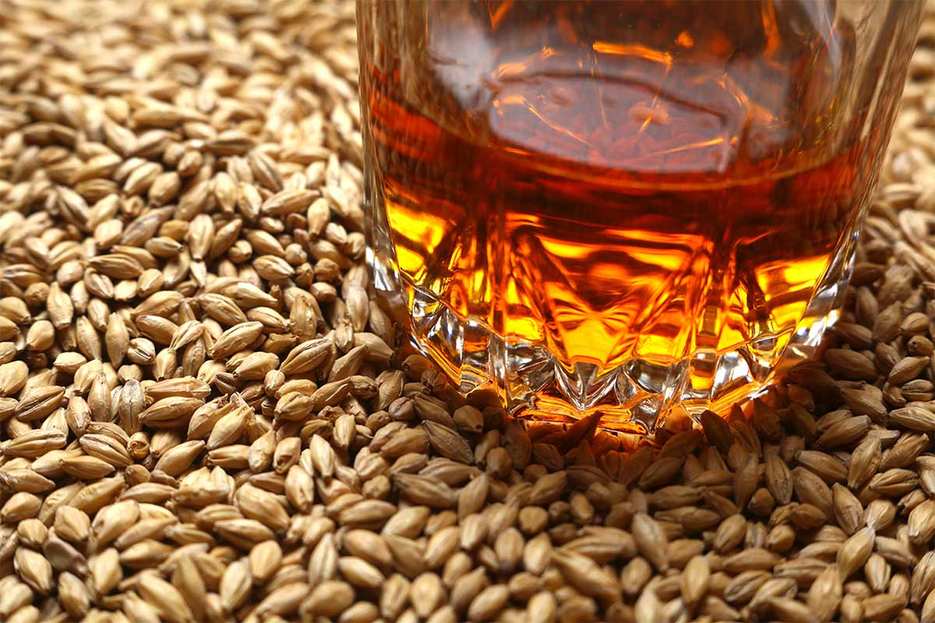
In whisky production the choice of grain is a decisive step that shapes the finished spirit. Each grain brings its own characteristics, which is why whiskies differ so widely in flavour and aroma. In this article we look at which grains are commonly used in whisky production and at the scientific reasons why they suit the purpose.
Barley: the foundation of Scotch whisky
Barley is without question the grain most widely used in the production of Scotch whisky, and the reasons for that are well founded. It is rich in the enzyme alpha-amylase, which is essential for breaking the starch in the grain down into fermentable sugars. Beta-glucanase also helps to break down the cell walls of the grain, allowing sugars to be extracted more efficiently during mashing. The result is a smooth whisky with the gentle nutty note that is characteristic of Scotch.
Maize: the basis of bourbon
Maize is widely used in the production of bourbon. Although its enzyme levels are somewhat lower than those of barley, it has advantages of its own. Maize is rich in sugar, which allows a greater volume of alcohol to be produced during fermentation. It needs more time and heat for the starch to break down, but the finished spirit gains the sweet, mellow flavour that is typical of bourbon.
Rye: the lively profile of rye whiskey
Rye is the key component of rye whiskey and gives it its recognisable flavour profile. The grain has strong diastatic power, the enzyme activity needed to convert starch into fermentable sugars. Rye also contains a higher proportion of fatty acids than other grains, which lends the finished spirit a peppery, bold character.
Wheat: the smooth profile of blended whiskies
Wheat is often used in blended whiskies, where it adds softness and smoothness. Its enzyme levels are lower than those of the other grains, but it contributes a mellow flavour profile. The higher protein content of wheat also gives a creamy mouthfeel, which rounds out the drinking experience.
By selecting grains carefully and understanding their properties, distillers can create a wide spectrum of flavours and aromas. From sweet, mellow bourbon to peppery, bold rye whiskey, every type of whisky carries its own story. Carefully balanced combinations of grains make it possible to produce whiskies that satisfy the most varied tastes and preferences.