
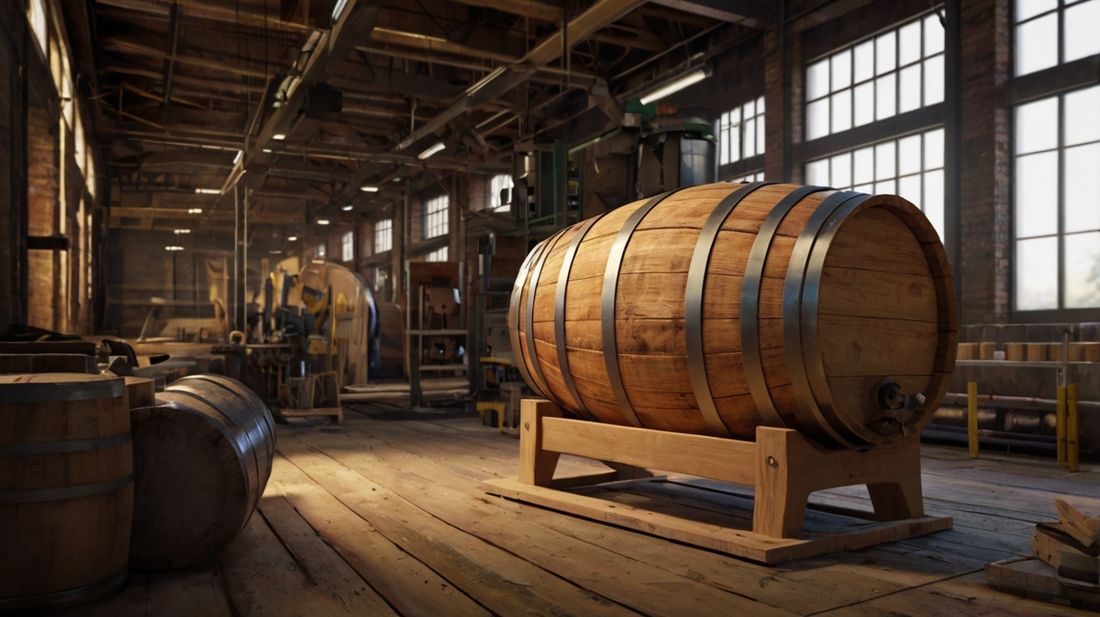
A barrel is more than wood
In the Balkans few objects carry as much meaning as the wooden barrel. It is not merely a vessel in which wine or brandy matures. A barrel is a story about tradition, skill, patience and love of a craft. It is no accident that in many families a barrel is passed from one generation to the next, almost as a family treasure, often with years or initials carved into it.
But if you want to make outstanding brandy or wine today, or simply to enrich your cellar or your restaurant, the choice of barrel is no longer only a matter of tradition. It is a matter of science, of art and of strategy. Which wood? How many litres? New or used? Which level of toasting? All of these questions have an enormous influence on the quality, the taste, the aroma and the colour of your drink.
1. A short history of the barrel
The barrel is an invention more than 2,000 years old. The first records of wooden vessels go back to the Roman Empire. Before the Romans, wine was kept in clay amphorae, but amphorae were fragile, hard to transport and broke easily. The Romans noticed that wooden vessels were not only more resistant but also gave wine particular aromas.
In the Middle Ages, in European monasteries, barrels became an indispensable tool in the making of wine and beer. The monks experimented with different woods and with toasting the inside of the barrel, and recorded how different treatments changed the aroma and the colour of a drink.
In the Balkans the barrel is not only a piece of technology but a symbol of hospitality. A barrel full of brandy or wine has always been a sign that the host is ready to share his pleasure with guests. To this day, in many families, barrels keep family secrets and the scents of older times.
Today barrels have become a luxury product. Distilleries and wineries in France, Italy and Serbia compete for the best coopers, because they know that the barrel decides the quality of the final product.
2. The anatomy of a barrel
A barrel is not simply a “wooden vessel”. It is a precise combination of wood, metal and craftsmanship.
- Staves – the thin wooden boards that make up the body of the barrel. Their thickness, width and the way they are joined are decisive for the strength of the barrel and for the flow of oxygen.
- Heads – the two round boards that close the barrel at the top and the bottom.
- Hoops – metal (or wooden) rings that hold the staves together. If a hoop works loose, the barrel can leak.
- Bung or tap – allows the barrel to be emptied. A tap is particularly popular on smaller barrels meant for serving.
- The inside of the barrel – often toasted or charred so that the wood releases its aromatic compounds.
The length of the staves, their thickness, the quality of the wood and the way the barrel is put together determine its quality. It sounds simple, but making a good barrel is an art in itself.
3. Which wood to choose
Oak – the king of barrels. If you ask ten winemakers or distillers which wood is best, nine will say oak. Oak is particular because it contains tannins, which give structure and resistance to oxidation; lignins, which release vanilla during toasting; and lactones, which give notes of coconut and sweetness.
- Quercus robur (pedunculate oak) – stronger tannins, earthy aromas.
- Quercus petraea (sessile oak, the classic “French oak”) – finer tannins, elegance and vanilla.
- Quercus alba (American oak) – a strong coconut aroma and sweetness.
For brandy, Serbian oak is often the best choice because it gives a fuller, more robust taste. For wine, French oak is a frequent choice because of its subtlety.
Acacia (robinia) – the gentler option. Acacia is growing in popularity. Its advantages are a lower tannin content, keeping the freshness of the wine and more discreet aromas. It is ideal for white wines, which want only a light touch of wood. In brandy, acacia gives softer, floral notes.
Mulberry, chestnut, cherry – the unusual choices. Mulberry is a traditional wood in the Balkans and gives honeyed notes. Chestnut brings sweetish flavours but with more tannin. Cherry adds fruity, red notes, but subtly. If you want something authentic or experimental these are interesting, but for a first barrel oak or acacia is the safer option.
4. The size of the barrel
Small barrels (3-30 litres): fast maturation, an intense influence from the wood, excellent for small batches, gifts and experiments. But keeping a drink too long in a small barrel can give too much tannin.
Medium barrels (50-100 litres): the best balance between wood and drink, excellent for small distilleries, a popular size for brandy.
Large barrels (225-300 litres): slower maturation, a finer balance, ideal for fine wines or for brandies meant for longer ageing. The standard wine barrel, the barrique, holds 225 litres.
5. New or used?
A new barrel gives intense aromas – vanilla, smoke, caramel – and richer tannins. It is ideal for brandies you want to give a strong profile. But it can be too much for a subtle wine. A new barrel needs preparation: rinsing with cold water to remove excess tannin.
A used barrel gives a gentler influence from the wood and riper, softer aromas, and is often ideal for wine. Wineries frequently use a barrel on its second or third fill. A barrel that has already been used gives complexity without overstated wood notes.
6. Toasting – the key factor in flavour
Toasting means charring the inside of the barrel. Light toast gives more tannin and fewer aromas; medium toast a balance between tannin and sweet notes; heavy toast less tannin and more smoke, coffee and caramel. For brandy, medium or heavy toasting gives notes of caramel and smoke. For white wines, light toasting preserves freshness.
7. Viniblok cubes – an alternative to a barrel
If a barrel is too expensive or you do not have the space, there are wooden cubes such as Viniblok. They release their aroma more quickly, they are cheaper and they suit small batches. A barrel, though, gives a slower and deeper influence. Cubes are excellent for beginners or for fine adjustment of a flavour.
8. Looking after a barrel
Preparing a new barrel: rinse with cold water (24-48 hours) and check for leaks.
Storing an empty barrel: it is best kept damp so that the wood does not shrink, or filled with water.
Cleaning: do not use strong chemicals; rinse from time to time with sulphured water to disinfect.
Repairing a leak: the staves are professionally driven tight, or a hoop is replaced.
A good barrel can last 30 to 50 years if it is properly looked after.
9. Myths and truths
- Myth: “Older barrel = better barrel.” Truth: an older barrel has less influence on aroma. Sometimes you want a new one for a stronger flavour.
- Myth: “All barrels are the same.” Truth: wood, size and toasting all change the result.
- Myth: “A barrel can stand empty for years.” Truth: dry wood cracks; a barrel has to be kept damp.
10. From our own work
A distillery on Fruška Gora asked for a special barrel for quince brandy. Kolibica made a barrel of local oak, medium toast, 100 litres. The client says the brandy gained notes of honey and vanilla it had never had before.
A winery from North Macedonia wanted to experiment with acacia for a white wine. Kolibica delivered a 225-litre acacia barrel. The result? The wine kept its freshness but gained discreet floral aromas, and was well received at wine festivals.
Kolibica has also fitted out several bars where used barrique barrels were turned into bar tables – a combination of appearance and sustainability.
Conclusion
The right barrel is a key ingredient of a good wine or brandy. It is not only a wooden vessel: it breathes, it gives aromas, it creates character. Whether you are a winemaker, a distiller or simply someone who enjoys a good drink, the choice of barrel is an investment in quality.
So before buying, consider: what flavour do you want? How quickly do you want it to mature? Which wood do you prefer? New or used? And do you want branding and engraving?