
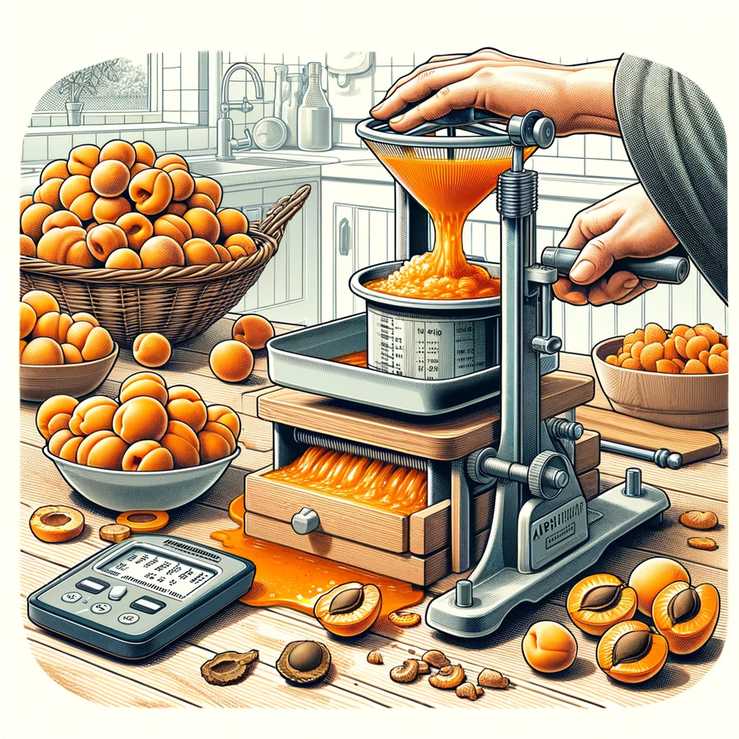
Techniques for preparing and fermenting apricots to make a first-rate brandy.
Introduction
Making apricot brandy is a craft that calls for expertise and precision at every step. It is essential to start with good raw material and to follow every stage of preparation and fermentation carefully if the finished product is to be what you intend. This article is a detailed guide through all the stages, from choosing the fruit to the final steps of fermentation, with particular attention to the technical detail a first-rate apricot brandy requires.
1. Choosing the right apricots
The quality of the finished product depends directly on the quality of the fruit used. The ideal fruit for brandy is ripe and over-ripe apricots that are not rotten. Such fruit contains the optimum quantity of sugar needed for an efficient fermentation.
Ripeness: ripe apricots have a high sugar level, which is ideal for producing alcohol during fermentation. Over-ripe fruit can be useful for its high sugar content, but completely rotten fruit must be avoided, because it can introduce unwanted microbes into the fermentation.
Fruit quality: using partly over-ripe fruit can increase the risk of the unpleasant smells characteristic of mould. Fruit that is not ripe enough, on the other hand, can give the brandy a grassy taste, which is unwanted. Careful selection of the fruit is therefore the first and perhaps the most important step in producing a good apricot brandy.
2. Preparing the apricots for fermentation
Once the right fruit has been chosen, the next important step is preparing it for fermentation. This covers pulping the fruit, removing the stones and adjusting the pH, all of which are key to a successful fermentation.
Pulping and removing the stones: the fruit must first be pulped carefully so that the pulp is separated from the stones. Apricot stones contain amygdalin, a glycoside that is broken down by enzymes and releases benzaldehyde, a compound with an unpleasant smell and potentially toxic effect. Careful removal of the stones is necessary so that the brandy does not take on a bitter, sour taste with notes of almond.
Adjusting the pH: the pulp has to be at the optimum pH so that the yeast has a favourable environment and the growth of unwanted micro-organisms is kept to a minimum. For apricots the ideal pH is around 3.5. The pH is usually corrected by adding tartaric acid or sulphuric acid. Tartaric acid is added at 2 to 3 grams per kilogram of pulp, while concentrated sulphuric acid is added at 10 ml per 10 kg of pulp.
3. Adding yeast and yeast nutrient
With the pulp prepared, the next essential step is adding yeast and yeast nutrient. This step is key to starting and sustaining an efficient fermentation.
Choice of yeast: choosing the right yeast matters for apricot brandy. Yeasts not only start the fermentation by converting sugars into alcohol, they also markedly influence the flavour and aroma of the finished product. Specialised brandy yeasts are recommended, such as Uvaferm SLO, Lalvin DV10 or Uvaferm CM, known for their efficiency and their ability to keep the process stable even under stress, such as a low pH.
Rehydrating the yeast: before it is added, the yeast has to be rehydrated properly. This is done by mixing it with water in a ratio of 1:10 (yeast to water) at a water temperature of 35 °C to 40 °C. After 15 to 20 minutes the rehydrated yeast is added directly to the pulp.
Adding yeast nutrient: nutrient is added so that the yeast has everything it needs for an efficient fermentation. It is usually added in two stages: the first once fermentation has progressed a third of the way, the second when two thirds are complete. This helps keep the yeast vital and gets the most out of it throughout the fermentation.
A note on temperature
When working with yeast for wine or any other fermented drink, it is very important to watch the temperature so that the yeast does not suffer temperature shock, which would affect the fermentation adversely. Ideally the temperature of the rehydrated yeast should be at most 10 degrees Celsius above that of the mash, and better still only 5 degrees above. If the mash is at 16 degrees, for example – which can happen if the fruit has been chilled beforehand – the yeast needs to be brought down to 21 to 25 degrees. This is achieved by adding small quantities of mash to the yeast every few minutes, stirring continuously. The process lowers the temperature of the yeast gradually, which prevents shock and ensures a healthy, efficient fermentation once the yeast finally goes into the mash. Follow these steps and your fermentation will run smoothly and without needless obstacles.
Through these steps the apricot pulp is transformed into a fermenting mixture that will in time become a high-quality brandy.
4. The part enzymes play in fermentation
Enzymes play a key part in optimising the fermentation of apricot brandy. They not only help break down complex sugars and cellulose but also markedly affect the quality, the clarity and the yield of the finished product.
Why enzymes matter: using enzymes in brandy production helps break down pectin, which is present in the fruit and can hinder both fermentation and the distillation that follows. Enzymes such as pectinases make it easier for sugars to be released from the fruit mass, which allows the yeast to produce alcohol more efficiently. Enzymes also help clarify the brandy, reducing haze and improving the quality of the distillate.
Which enzymes to use: certain enzymes are recommended for apricot brandy in particular:
Lallzyme EX-V: this pectinase is ideal for improving the extraction of apricot aroma and increasing the yield of must. Dosage is around 5 to 8 g per 100 kg of fruit mass.
Lallzyme Cuvée Blanc: a blend of pectinase and beta-glucosidase that helps bring out the aromatic character of the apricot and raises the quality of the mash. The recommended dosage is 1.5 to 2 g per 100 kg of mash.
How to apply them: enzymes are usually added immediately before or during the addition of yeast to the pulp. It is important to follow the recommended doses and reaction times so that their potential is used to the full.
By using these enzymes, producers can improve both the efficiency of fermentation and the quality of the finished product considerably, avoiding common problems such as excessive haze or an incomplete fermentation.
5. Controlling temperature and the length of fermentation
Controlling the temperature and setting the right length for the fermentation are key to a high-quality brandy. Both factors directly affect the speed of fermentation and the development of aromas in the finished product.
Temperature control: fermentation is an exothermic process, meaning heat is released as it goes on. The ideal temperature for fermenting apricots should be held between 18 °C and 25 °C. Temperature control is essential to preventing a violent fermentation, which can lose aromas. Temperatures that are too high can speed the fermentation up and encourage the development of unwanted micro-organisms.
Cooling methods: where they are available, chillers with heat exchangers are an effective way of controlling temperature. Where they are not, an alternative is to place frozen bottles of water in the fermentation vessel to bring the temperature down. The method is practical and economical but calls for frequent checking and adjustment.
Length of fermentation: ideally, fermentation should last between 7 and 10 days. Over this period the sugar in the mash is gradually converted into alcohol, and the total drop in sugar should be between 10 and 15 per cent a day. Getting the length right is important so as to avoid excessive cooling or overheating, either of which can affect the quality of the mash and of the finished brandy.
By holding the temperature under control and getting the length of fermentation right, producers can get the most out of the quality and character of an apricot brandy, making sure all the natural sugars are converted into alcohol efficiently while the valuable aromas are preserved.
6. Challenges and mistakes in distilling
Making apricot brandy can be a complex business, open to a number of mistakes that can markedly affect the quality of the finished product. Understanding these challenges and how to avoid them matters for every producer.
Common mistakes
Adding sugar to the mash: this is common practice in some home production but is thoroughly undesirable. Adding sugar can lead to an uncontrolled fermentation and the development of unwanted micro-organisms, which results in an inferior brandy.
Insufficient temperature control: as noted above, a temperature that is too high or too low can affect the fermentation adversely, causing unwanted flavours to develop or even spoiling the mash.
Late or inadequate intervention during fermentation: delaying the addition of yeast or yeast nutrient, or getting the timing of the enzyme addition wrong, can lead to poorer results and an incomplete fermentation.
How to avoid them
Monitor and control the process: establish a strict regime that includes regular checks on temperature, pH and the density of the mash. That allows you to respond in good time to any anomaly in the process.
Use good ingredients: use the recommended yeasts and enzymes, and never add sugar to the mash. Choosing good fruit is equally essential.
Distil in good time: once fermentation is complete, it is best to move to distillation as soon as possible so that all the aromas that have developed are kept.
By managing these challenges properly and avoiding the common mistakes, producers can secure a high-quality apricot brandy, rich in natural aromas and in the characteristics they want.