
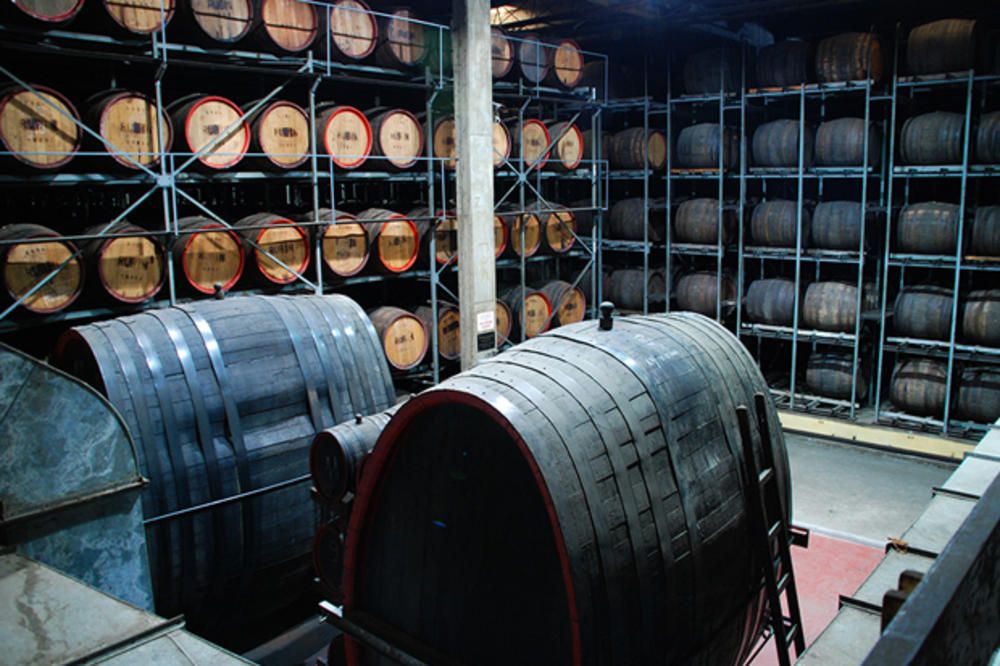
For some, vinjak – the Serbian grape brandy – is the king of all distilled drinks. It carries a rich tradition, a complexity of aromas and a rare elegance that make it one of the most highly regarded spirits anywhere. At the heart of its production lies the careful selection of raw materials and grape varieties, which together form the basis of first-rate quality. In this article we look at the key factors that make vinjak a distinctive spirit, focusing on geographical origin, the choice of grape and the production process.
Geographical origin and the importance of the soil
Geographical origin plays a key part in selecting the raw materials for grape brandy. Regions such as Bordeaux in France, the Douro valley in Portugal and certain parts of the Balkans are known for ideal conditions for growing grapes suited to producing a high-quality brandy. A temperate climate, rich soil and optimum sunshine create ideal conditions for the grapes to ripen and for complex aromas to develop.
The soil has a marked effect on the character of the grape and the wine. Limestone, stony and clay soils each bring different elements into the grape, which results in a range of flavours and aromas in the finished product. A brandy produced from grapes grown on limestone often has elegance and a fine minerality, while grapes from stony soil can bring additional structure and complexity.
The choice of grape and its part in producing vinjak
Choosing the right grape varieties is a key step towards first-rate quality. Different varieties bring different characteristics into the distillate, which adds to the complexity and richness of the flavour. Varieties such as Cabernet Sauvignon, Merlot, Prokupac and Folle Blanche stand out as well suited to grape brandy because of their particular characteristics.
Cabernet Sauvignon
Cabernet Sauvignon is one of the best-known and most widely planted grape varieties in the world, and is often used for brandy of the highest quality. It brings deep fruit aromas of dark berries such as blackcurrant and plum, with additional notes of spice, capsicum and black pepper. Brandies made from Cabernet Sauvignon are usually full-bodied, with pronounced tannins and a long finish.
Merlot
Merlot is another popular variety often used for grape brandy. It brings softness, fullness and smoothness, with aromas of red fruit such as cherry, plum and raspberry, and additional notes of chocolate, vanilla and spice. Brandies made from Merlot are often elegant, with a silky texture and a vivid flavour.
Prokupac
Prokupac is a native variety traditionally grown in the Balkans, particularly in Serbia. It brings characteristic aromas of cherry, raspberry and plum, with hints of spice and earth. Brandies made from Prokupac usually have medium body, lively acidity and smooth tannins, with a pronounced fruit note.
Folle Blanche
Folle Blanche is a variety widely used for French cognac. It brings subtle aromas of citrus, peach and blossom, with additional notes of vanilla, almond and wood. Brandies made from Folle Blanche are usually bright, elegant and exceptionally complex.
It should be stressed that the choice of grape varieties can vary with geographical origin, local tradition and the producer’s preference. Every variety has characteristics of its own that can add to the complexity and quality of the finished product. With the varieties properly balanced and the production carried out carefully, grape brandy becomes not merely a drink but a craft that charms with its complex flavours and aromas.