
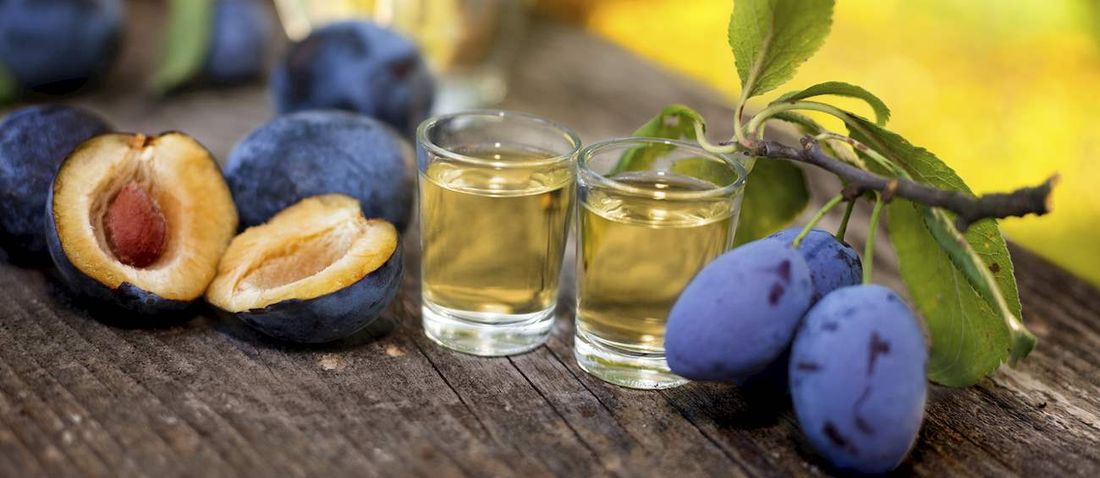
Šljivovica, known around the world as slivovitz, is one of the most significant spirits of the Balkans. This strong fruit brandy is produced by distilling fermented plums, and its origins reach deep into the history of the region. For many of the peoples who make it and enjoy it, it is a symbol of tradition, hospitality and togetherness.
Slivovitz is produced widely across Central and Eastern Europe, with the best-known producers in Serbia, Croatia, Bosnia and Herzegovina, Slovenia, Hungary, Slovakia, the Czech Republic, Bulgaria, Poland and Romania. Each of these countries has its own particularities in how the spirit is made and enjoyed, which gives it a rich and varied cultural heritage.
The production process varies with tradition and with the producer’s preference. Some distil only once, while others prefer multiple distillation for a stronger flavour and a cleaner character. After distillation, slivovitz is often matured in oak barrels to take on particular aromas and colour. This ageing can last from a few months to several years, depending on the quality and style sought.
Slivovitz can also be kept in neutral vessels of stainless steel or glass, with oak alternatives – staves, cubes, spirals and chips – used to add aroma and colour and to round out the flavour.
As for serving, a good slivovitz is always drunk neat, without additions and without dilution. It is best served well chilled, ideally in a rakija glass. Traditionally it is taken as an aperitif or a digestif, and it is often drunk on festive occasions such as family celebrations or religious holidays.
Although slivovitz has a long tradition of being made at home, commercial production has grown considerably in recent decades. With various regional brands now on the market, enthusiasts have a wide choice of quality and style. Even so, many people still keep up the tradition of making it at home, which helps preserve the authentic flavour and character of the spirit.
The importance of slivovitz is not only cultural but economic. Producing it contributes to rural development in many regions where plums are grown and brandy is distilled. Tourism built around distillery visits and tastings is also becoming more popular, which supports local economies and the promotion of traditional values.
In 2007 several Central and Eastern European countries reached an agreement with the European Union that allowed each of them to protect its own version of the spirit under the name it wanted. That protection is an important step in preserving the authenticity and tradition of production, and helps safeguard the cultural heritage of the region.
Šljivovica can fairly be described as a distinctive symbol of the Balkans, one that brings together people and cultures across the region. Its long tradition, the range of its flavours and aromas, and its economic significance make it an inseparable part of the cultural and gastronomic identity of this part of Europe.