
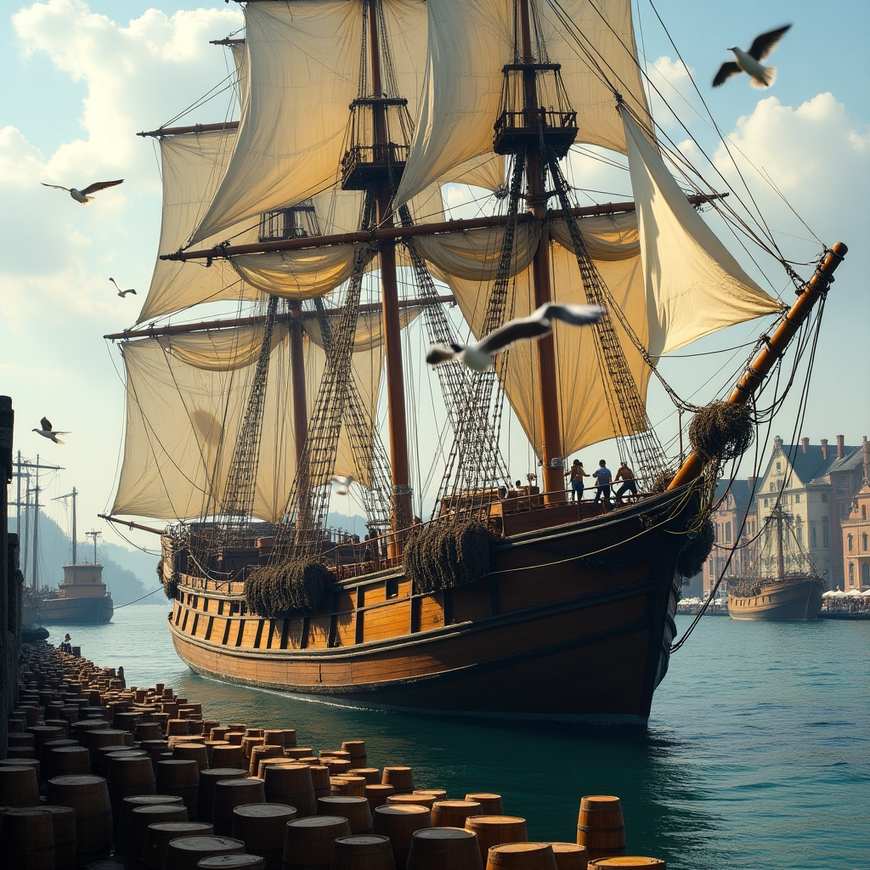
Some expressions raise a smile and a question at the same time. Buttload is one of them – a word used today as a jokey synonym for an enormous quantity of something. In everyday speech you hear “I have a buttload of work” or “he has a buttload of money”. At first hearing it sounds like ordinary slang with a slightly cheeky ring. What sets it apart from many other comic expressions, though, is that it has a real historical origin.
Most people assume that “buttload” has something to do with the comic or even the crude. The truth is far more elegant and a good deal more interesting. The term comes from a time when the wine and beer trade shaped the ports of Europe and enormous wooden barrels were a unit of measure of decisive importance.
1. From barrels to an expression: the origin of “butt”
To understand why a buttload means “an enormous quantity”, we have to go back several centuries, to a time when wine was the main fuel of European economies. In medieval England, France, Spain and other trading centres, moving large quantities of wine, beer and spirits called for standardised measures of volume.
One of those measures was the butt – the name for a large wooden cask used to store and transport liquids. According to historical documents and records from the English royal archives, the butt was an official unit equal to two hogsheads, or roughly 126 gallons, about 476 litres in today’s terms. That is almost half a cubic metre of liquid in a single cask.
Casks like these were not only containers but economic instruments. At a time when taxes and duties depended on the quantity of alcohol imported or sold, standardisation was essential. Merchants had to know exactly how much wine they were buying or selling, and the crown had to know how much to charge.
Use in maritime trade
In the 14th and 15th centuries, English ports such as London, Bristol and Southampton were full of these massive casks. Ships sailing for France, Spain or the Portuguese colonies carried butts of wine, beer or rum, because that size was ideal for long voyages – large enough to make the transport worthwhile, and still practical enough to be stacked in a hold.
On the trade routes the butt became a synonym for a large and valuable consignment. Historians record that inns and taverns across England ordered wine “by the butt” to secure supplies for long winters and great celebrations. These casks were so common that they appear in laws and customs tariffs, with prices varying by the type of drink and its origin.
The linguistic origin
The word butt comes from the Old French “botte”, meaning a large cask, and entered English during the Norman period. It later became a standard term in the British system of measures. The same root gave other words as well, among them the Italian “botte”, which still means a barrel today.
Why 126 gallons?
You might ask why merchants settled on that particular volume. The answer lies in the practice of measurement and taxation at the time. In England the gallon was the basic unit, and a hogshead (half a butt) held about 63 gallons. Two of those made one butt, which gave a practical measure for both transport and taxation.
Ships had limits on what they could carry, and duty was charged by the cask. The butt was the optimal compromise – large enough to reduce the number of casks on board and so to save space, and still stable enough to be moved and stacked easily.
2. The butt in everyday medieval life
While it is almost impossible to imagine someone saying in conversation today, “I bought a butt of wine”, in the Middle Ages that was an ordinary sentence. Taverns, monasteries and even royal households ordered wine in exactly this way.
A well-known example comes from the 15th century, when the English king Edward IV ordered wine from Bordeaux in butts. Royal records show that the court consumed dozens of these casks during great feasts, which says a good deal about their enormous volume and their importance in the economy of the time.
Why “buttload” survived while the butt did not
Although the measure itself disappeared from modern systems, replaced by litres and gallons, the expression survived. Why? The answer lies in humour and in the vividness of language. When someone says “buttload”, the listener instinctively knows that something very large is meant, even without knowing the historical measure.
The combination of “butt”, which in modern English also means the backside, and “load” created the perfect basis for slang that is both comic and vivid. It is exactly that ambiguity which helped the expression survive in everyday speech, long after the original measure was forgotten.
3. Old measures of volume – the world before litres and gallons
Before litres and gallons became the standard, people used a whole series of colourful measures for liquids. Many of them sound invented today, but in their time they were strictly defined and regulated by law. Besides the butt, the English system included:
- Tun – the largest measure, an enormous cask holding about 252 gallons (some 950 litres).
- Hogshead – half a butt, roughly 63 gallons (about 238 litres).
- Puncheon – between a hogshead and a butt, about 84 gallons.
- Tierce – a smaller cask, about 42 gallons.
- Firkin – smaller still, about 9 gallons.
Each of these measures was part of a precisely organised system in which every larger unit contained an exact number of smaller ones. Two hogsheads made one butt, while four butts made one tun. That hierarchy made it easier for merchants to calculate duty and to arrange transport.
Regional differences
Although the English measures were the most influential, similar systems existed across Europe. France used pièces and barriques, Germany the Fuder, Italy the botte. Volumes differed from port to port, but they had one thing in common: they were practical for the wine and beer trade.
These measures were not only a technical standard – they shaped everyday language, commercial contracts and even literature. Shakespeare frequently mentioned casks and measures of wine in his plays, because they were part of the daily life of his audience.
4. Maritime trade and wine: the engine of the medieval economy
To understand why the butt became so important, we have to look at the wider picture of European trade in the Middle Ages. Wine, and later rum, were not only luxuries – they were key export goods that brought enormous revenue into state treasuries.
Ships full of butts. England imported large quantities of wine from France, particularly from the Bordeaux region. Every ship docking in the port of London carried hundreds of butts, neatly stacked in the hold. These casks suited sea transport perfectly: large enough to reduce the cost per gallon, and durable enough to survive long voyages and changes in temperature.
On the Atlantic route, particularly after the discovery of the New World, butts became the standard for carrying rum from the Caribbean. The British colonies in America used the same system of measures, so the butt became a universal unit in international trade.
The economics of duty. Taxes on alcohol were one of the main sources of revenue for the European crowns. Royal duty was charged by unit of volume rather than by the number of casks, which made standardisation essential. Every butt of wine or rum was recorded and taxed, and the measure became a synonym for large financial transactions.
5. The linguistic road to modern slang
How did a strict technical measure become a humorous expression? Language has its own logic, and in the case of the buttload several things played a part.
The ambiguity of “butt”. In modern English “butt” also means the backside. That ambiguity opened the door to humour and wordplay. Over time people began using “buttload” figuratively for an enormous quantity, with a dose of jokey provocation.
The sound of it. The expression is short, sonorous and easy to remember. Like other slang terms – boatload, shitload – its rhythm and stress make it perfect for emphasising a large amount.
Cultural change. With the industrial revolution and the move to litres and gallons, the butt lost its practical use. But the word went on living in the language, now freed from its technical meaning and ready for humour and everyday use.
6. Curiosities from the history of the butt
The largest casks ever built. In 18th-century Germany casks were built holding as much as 200,000 litres. The famous Heidelberg Tun can still be seen in Heidelberg Castle – large enough to hold an orchestra or a small dance floor.
Shakespeare. In his plays Shakespeare often mentioned butts of wine as a symbol of wealth or extravagance; a butt of malmsey appears in Richard III. His audience knew exactly what quantity that meant, so the effect was realistic and comic at once.
Royal orders. Records from the English archives show that some kings ordered dozens of butts of wine for state banquets. Imagine a ship unloading whole palaces of casks, each holding more than 450 litres.
In modern terms. One butt of 126 gallons is roughly the volume of two and a half modern bathtubs, or almost two standard 200-litre beer kegs.
7. Buttload in contemporary culture
Although nobody orders wine by the butt today, the expression has become part of popular culture. It appears in films, television series and internet memes as a synonym for an enormous quantity of something, from work and obligations to money and entertainment.
On social media, “buttload” is used for humour (“I have a buttload of emails to answer”) or for a touch of irony (“the company spent a buttload on advertising”). Few people know its real origin, but the word carries an old-fashioned charm that makes it hard to resist.
8. Language as a bridge between past and present
The story of the buttload reminds us that language is a living thing. What was once a strict unit of measure is today a humorous everyday expression. The standardisation of trade in the Middle Ages, the sea routes, the taxes and the royal orders all left their trace in a single word.
The next time you hear someone say they have a buttload of work, remember that it is more than a joke. It is a historical link to a time when half a cubic metre of wine was a basic unit of trade, and enormous wooden casks shaped the economy of Europe.
9. How much is a buttload in today’s terms?
Taking the historical value of 126 gallons (about 476 litres), a few comparisons suggest themselves:
- the volume of almost ten standard 50-litre paint buckets
- enough to fill more than two large bathtubs
- about 1,200 beer cans of 0.33 litres – enough for a large party or a festival
- a volume that would fill a small paddling pool
These comparisons help explain why “buttload” has stayed a synonym for an enormous quantity. When the measure came into being it really was one of the largest practical units in the everyday drinks trade.
10. A family of humorous measures
English knows a whole family of expressions that combine a concrete measure with a comic image. Besides “buttload” you often hear:
- Boatload – a whole boat of something, from the image of a ship full of goods.
- Shitload – a vulgar expression with the same meaning.
- Assload – probably older than “buttload”; it is thought to have meant the load a donkey could carry.
What these expressions have in common is that they keep a sense of physical volume even when used figuratively. People intuitively feel that a “boatload” or a “buttload” means something so large that it is measured by the vehicle or the cask rather than counted in pieces.
11. From Shakespeare to the internet
In literature. Shakespeare mentions butts of wine in Richard III in the context of royal supplies; his audience knew precisely what quantity that meant. In old English songs and records from the 15th and 16th centuries, “butt” often appears in commercial and romantic metaphors, emphasising abundance and splendour.
In film and television. In modern comedies and animated series, “buttload” is used as a harmless substitute for coarser expressions. Series such as The Simpsons and Family Guy use the term to convey an absurdly large quantity of food, money or trouble.
Online. On social media and in meme culture, “buttload” is the perfect combination of mild provocation and comic image. The hashtag #buttload appears from time to time on social platforms alongside photographs of enormous piles of food, parcels or crowds at concerts.
12. Economics, humour and staying power
Why did “buttload” survive the centuries when so many other old measures vanished for good? The answer lies in a mixture of practicality and fun.
- A clear mental picture – people still easily imagine an enormous wooden cask full of wine.
- Sound and rhythm – the word is short, easy to say and phonetically entertaining.
- Comic ambiguity – the modern meaning of “butt” adds a layer of comedy that makes the expression cheeky without being offensive.
- Cultural continuity – from Shakespeare to the internet, casks have been a constant symbol of abundance in Western culture.
Put those factors together and you get a word that resists time. The measure has disappeared from trade, but the expression has found a new life in language and in popular culture.
13. What historical measures teach modern marketing
The story of the buttload is not only an entertaining anecdote; it also offers lessons for brands today.
- The power of a story. The old measure survived because it had a rich story around it – maritime trade, royal feasts, distant ports. Brands that tie a product to an intriguing story build stronger emotional bonds with their customers.
- Sound and humour. Words that sound good and carry a little humour stay in the collective memory. A good slogan or product name often has the same qualities.
- Ambiguity as an advantage. Ambiguous expressions attract attention because they set the imagination going and start conversations.
14. The future of an old expression
It is unlikely that the butt will ever return to an official system of measures, but “buttload” looks set to live on in the language for a long time yet. Internet culture, memes and global connection only speed the spread of expressions like this.
It is also interesting that the word increasingly appears in educational contexts: linguists and historians use it as an example of how trade, language and humour shape our everyday expressions.
From royal casks to modern slang
The story of the buttload is a perfect example of how history and language intertwine. What began as a strictly defined measure of volume in the medieval wine trade became, over the centuries, a jokey expression for “an enormous quantity”.
Butts once travelled the oceans, filled royal cellars and brought revenue into state treasuries. Today the buttload travels the internet, appears in memes and in everyday conversation, and keeps its spirit of abundance and its dose of humour.
So the next time you hear someone say they have a buttload of work, remember that behind the word stands a whole story about trade, standardisation, language and the human need to laugh. One measure, one cask, one journey through language – and a buttload of history that still inspires.